


Responsive street furniture and future technology development
Responsive street furniture and future technology development
The latest ideas focus on adaptability:
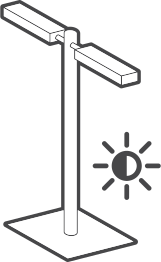
A street light may change its brightness according to the needs of the person walking by.
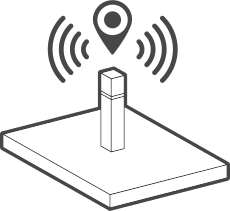
A bollard or bin might give audio information to someone who’s partially sighted and wants reassurance of where they are.
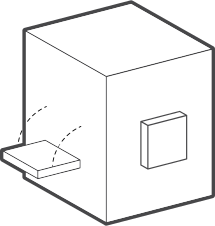
Larger structures could have fold-down seats for those who aren’t in wheelchairs but whose mobility is limited.
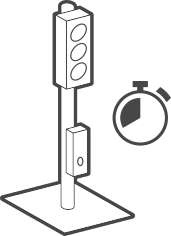
Traffic lights can allow pedestrians more time to cross the street if they need it.
Planners have often had to pick one disability over the other in the past, meaning a problem solved for one group is a problem caused for another. Extra seating may be useful for some, but it reduces the amount of space someone in a wheelchair has to move in, and in some cases may even block their way completely.
Likewise, simple designs and calm colours are more soothing for those with autism, but the blind and visually impaired need bright, c ontrasting colours and distinctive, tactile features to help them understand where they are.
Responsive street furniture means no one has to compromise.