
mark

GUIDE TO ACCESSIBLE & RESPONSIVE STREET FURNITURE

mark wall

Overcoming Common Accessibility Problems For The Disabled

What does the law say?


It’s been established that accessibility is good for business, but what does the law say?


The Disability and Discrimination Act 2005 states that it’s unlawful to make it unreasonably difficult for a disabled person to use a service. The Equality Act 2010 adds that disabled people should have equal access to education, employment, goods, services, facilities and transport. Service providers had to make changes (known as ‘reasonable adjustments’) to ensure their facilities were suitable once the act became law.


Thermae Spa in Bath is one example. It’s on a site with several listed buildings, so they installed lifts wherever possible and ramps where renovations are restricted. The beds in their treatment rooms can be raised or lowered accordingly, there are hoists, assisted seating, and shallow step access into the pools, and their signs are tactile and written in Braille. Private changing rooms for wheelchair users are available. Local accessibility group, Access Bath, gave feedback throughout the process to ensure facilities were suitable.


Despite these measures, accessibility problems are still an issue throughout the country. Facilities such as toilets and changing rooms in high street shopping complexes aren’t always adequate, while unsuitable parking facilities, public transport, and routes in town centres restrict ease of movement. In some cases, they may deter disabled people from visiting a place at all.

pregnant-woman
mark

Common accessibility problems include:


Problems like these restrict the number of opportunities disabled people have to lead enjoyable lives free from unnecessary complications and contribute to society.

door

Unsuitable entrances, e.g. no ramps or lifts.

screen

Lack of facilities for the deaf and hearing impaired, such as induction loops and visual cues.

lock street

Lack of space between street furniture, meaning wheelchair users or people who walk with a stick or similar kinds of help can’t get through.

crosswalk

Lack of facilities for the blind and partially sighted, such as tactile surfaces, braille signs, and audio cues.

sign

Unclear signs and directions.

woman mark

Disability stats in the UK


There are 13.9 million disabled people in the UK. The most common disabilities are related to mobility (52%), stamina, breathing and fatigue (38%), and dexterity (27%). However, disability covers a range of conditions, such as problems with sight and/or hearing, progressive conditions like motor neurone disease, autism spectrum disorders, and mental health conditions. Long-term illnesses like cancer and HIV are also recognised as disabilities by law.


The Equality Act 2010 defines a disability as a physical or mental impairment which has a substantial and long-term adverse effect on your ability to carry out normal day-to-day activities.


The prevalence of disability increases with age:

mark mark

6

%

of children are disabled. The most common impairments are social and behavioural (33%).


16

%

of working age adults are disabled. They are less likely to have formal qualifications than someone without a disability.


45

%

of adults over State Pension age are disabled. The majority of people acquire their disabilities later in life. This figure is predicted to increase in line with the country’s ageing population.

Disabled people are more likely to be employed now than they were at the beginning of the 21st century, with 3.5 million in employment. Despite this, families with at least one disabled member are more likely to live in poverty.


A report by the Equality and Human Rights Commission found that this is a result of all the accessibility problems disabled people face throughout their lives. A lack of access to equal education, job opportunities, and facilities results in what’s known as a disability pay gap.

Visiting And Getting Around Towns


Visiting a town or city centre isn’t always straightforward when you have a disability. Many factors have to be considered before and during a trip, including:

Is it easy to see what you need to do? Are entrances and exits obvious? Are signs clear? Do bollards mark a distinct route for drivers or pedestrians to follow? Is there access for people whose mobility is impaired?
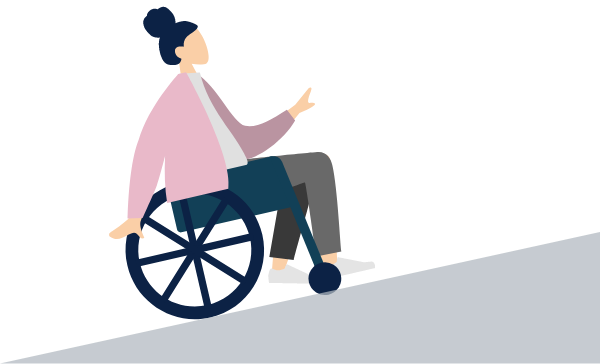
Do ramps have a gentle slope? Can they be navigated easily, or will assistance be needed? Do buses, trains, and taxis have the right facilities for disabled users if they need to use public transport? If they’re travelling by car, are there enough disabled spaces? Is there ample lighting for when it’s dark?

Getting around is much more difficult if the answer to any of these questions is no.


In 2018, The Papworth Trust released their Disability in the United Kingdom report. It discovered many disabled people find it difficult to access services in towns, especially for leisure purposes.


75% of disabled people have had to leave a shop or business due to the lack of understanding or awareness of their needs. Among the most common barriers were inadequate lifts or escalators (23%), lack of ramps and handrails (22%), parking problems (21%), and footpath design (15%).


And the effects of this can be alarming, shown by the 22% of disabled adults who reported having little choice over their free time (13% of non-disabled adults said the same).

man-with-stick mark

How street furniture can help


Accessible street furniture can make a significant difference to quality of life for the disabled, increasing the amount of independence they have. It gives them control over how they move through a space, since they know they can do so safely and with confidence.


Ideally, street furniture takes all users into account, rather than compromising the needs of one group for those of another. For example, placing benches at regular intervals gives people a place to rest, but it’ll restrict mobility for wheelchair users if they can’t get through.

Common examples of accessible street furniture


ramp

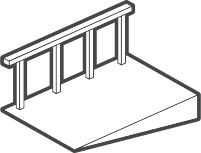
Ramps and handrails in public spaces (including on transport like buses and trains)

lift

Wheelchair lifts and/or ramps available in buildings and on transport (including taxis)

big-lift

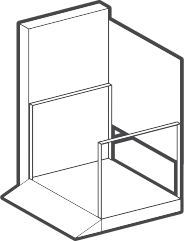
Lifts for level access (or where ramps would be too steep)

bench

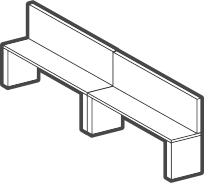
Seating placed at regular intervals

cabin

Induction loops for people who are hearing impaired

waySign

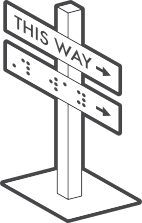
Clear signage with large font size and braille options

edge

Tactile surfaces help the blind or partially sighted differentiate between one area and another – these are often used to show where pedestrian crossings are, or to indicate the edge of train platforms

lamp

Good lighting

woman mark

What to consider when choosing street furniture


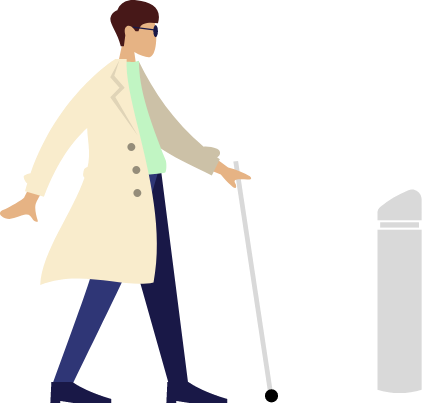
Will everyone be able to move freely and comfortably? Is there enough room for wheelchair users and people pushing prams to get through easily? Are there any potential trip hazards for the blind and partially sighted?


Is the space safe? Will there be enough visual contrast between the street furniture and its surroundings for blind and partially sighted people to identify it? Although most can identify some colour (82%) and light (96%), a combination of contrasting tones and tactile features work best to help them gather information about their surroundings.


Can everyone get the information they need? Is it clear what they need to do or where they need to go to get this information?

“Good streets are inclusive streets, and streets that are not inclusive are simply not good enough.”

Inclusive Streets: Design principles for blind and partially sighted people

Examples of successful and ongoing access projects


The following cities were all recognised by the Access City Award 2018 for their efforts to make visiting more accessible for all. Notable changes include better accessibility for wheelchair users, more information for those with visual or auditory impairments, and a focus on improving public transport.


Lyon, France
Ljubljana, Slovenia
Luxembourg, Luxembourg
Viborg, Denmark
map

Lyon

The city of Lyon has been praised for taking accessibility into account in all areas:

All buses are accessible and there’s a dedicated service for people with disabilities. A service called Optiguide gives users real-time information and guidance tailored to their needs.


A public transport app allows people to find the most accessible route to their destination. It lets them know about any broken-down lifts or escalators in advance.


The city also has its own app, which includes the option for residents to report barriers to accessibility, such as broken lights, and to identify parking spaces for people with disabilities.

High-contrast maps and hearing loops are available to visitors at the tourist office.


€38 million has been put towards improving the access of buildings and public areas.

map

LJUBLJANA

The city of Ljubljana in Slovenia has introduced the following to improve accessibility:

New footbridges have been built so people can cross the river safely.


The Mesarski Most (Butcher’s Bridge) allows wheelchair users to access the boats.


Tactile maps have been developed for visitors.

map

LUXEMBOURG CITY

Luxembourg City are embracing new technologies to improve accessibility:

Audible street signals have been added at all street crossings.


Buses now all have ramps and sit low to the floor. There are both audio and visual announcements.


Pieces of street furniture known as iBeacons have been installed at bus stops. They give passengers with visual impairments information about when the next bus will arrive and there are plans for them to benefit those with other disabilities in future.

map

VIBORG

Viborg have made the following changes to improve accessibility:

Streets, squares, and public gardens have been given new level pavements, ramps, and tactile guide strips.


Resting platforms have been added to steep alleyways throughout the city.

mark